Can a manager plan team capacity in TimeCampus without seeing what each person did all day?
Yes. In TimeCampus, managers can plan team capacity using aggregate data without surveilling an individual's minute-by-minute activity or daily task logs.
About this answer — Produced by our own assistant on 23 September 2026 from our published documentation. The pages it drew on are linked under the answer. It is generated text, not a statement from a person — where it and a linked page disagree, the page is right.
Answer
Yes. In TimeCampus[1], managers can plan team capacity using aggregate data without surveilling an individual's minute-by-minute activity or daily task logs.
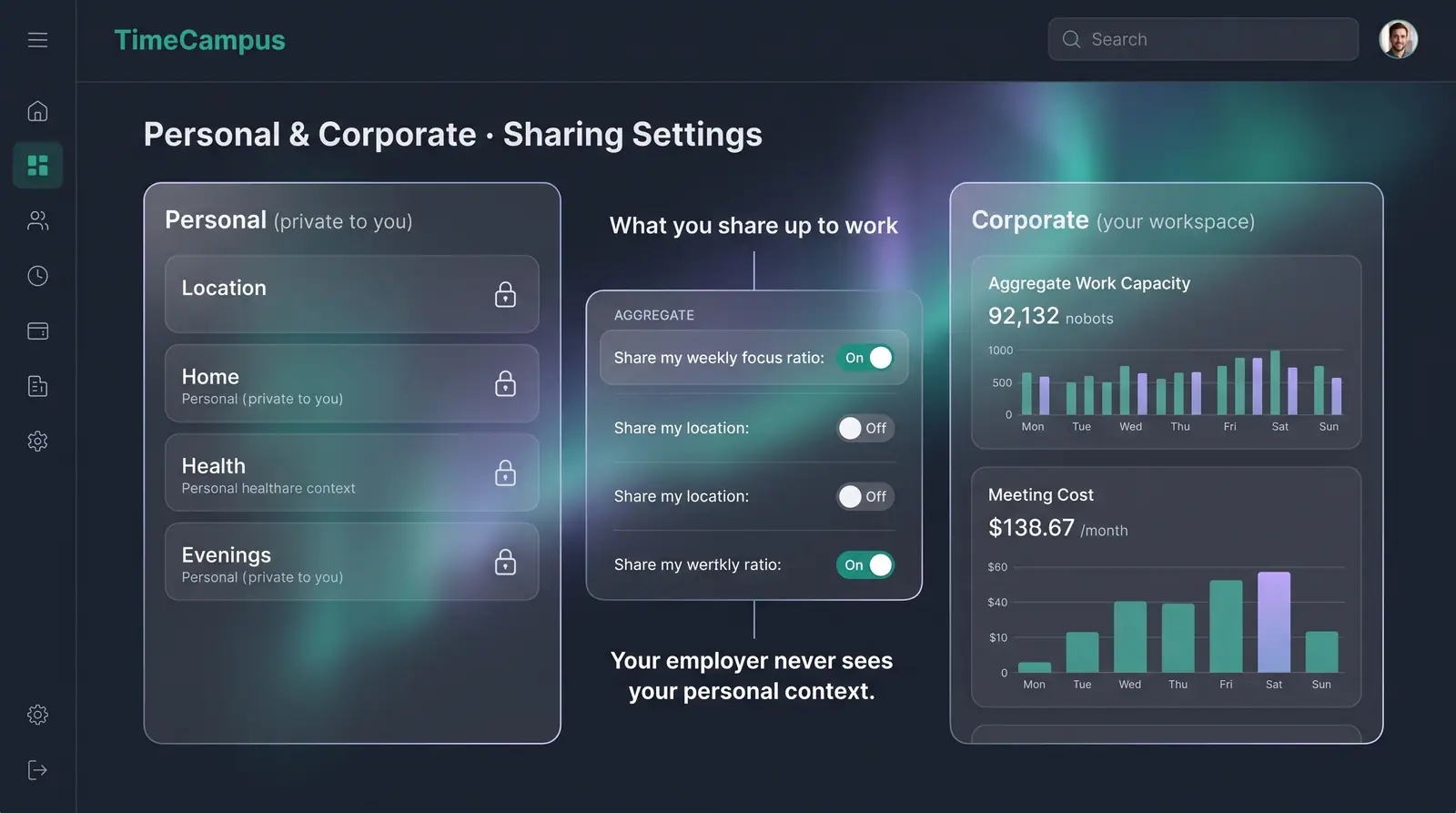
TimeCampus is built on an insight without surveillance[2] model—with zero screenshot capture and no keystroke logging. Personal data remains locked and private to the employee, ensuring workspace managers only see aggregate metrics and agreed project allocations (Privacy, Consent and Personal Boundaries[3]).
 (opens in a new tab)
Illustration of the concept, not a screenshot of the actual product — Privacy, Consent and Personal Boundaries[3]
(opens in a new tab)
Illustration of the concept, not a screenshot of the actual product — Privacy, Consent and Personal Boundaries[3]
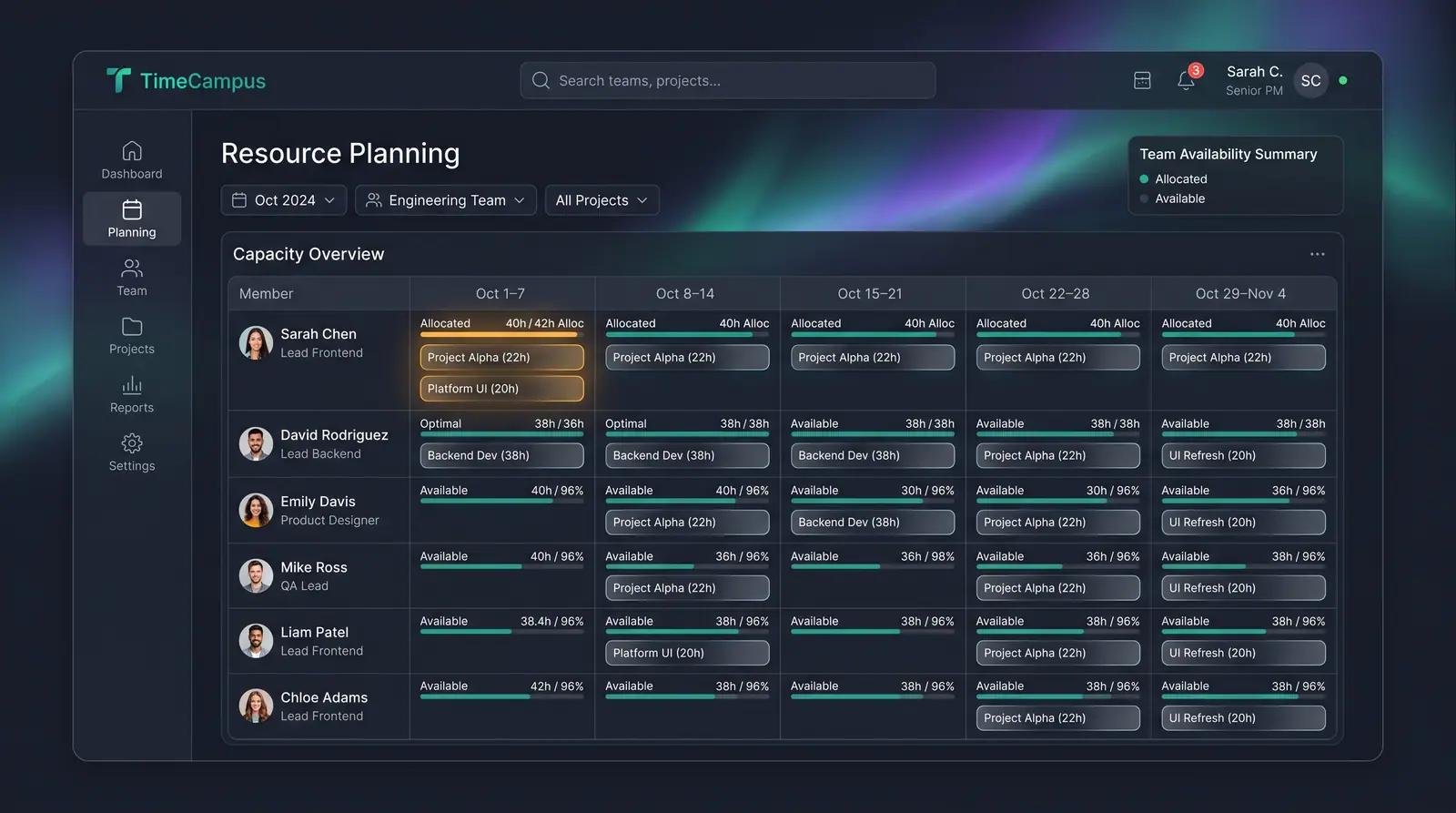
For capacity and workload management, managers use high-level analytics and resource grids (Team Activity and Capacity Planning[4]):
- Aggregate team analytics: View team-wide time distribution across deep work, meetings, collaboration, and admin, alongside capacity heat strips and meeting loads, without exposing individual streams.
- Resource planning grids: Allocate team members to projects week by week, track total hours against capacity, and rebalance overloaded schedules based on actual tracked project time rather than intrusive monitoring.
 (opens in a new tab)
Illustration of the concept, not a screenshot of the actual product — Team Activity and Capacity Planning[4]
(opens in a new tab)
Illustration of the concept, not a screenshot of the actual product — Team Activity and Capacity Planning[4]
To see how teams manage workloads sustainably, read the Team Capacity Planning use case[5] or check TimeCampus pricing[6].
Sources
The pages this answer was drawn from.
- Privacy-First AI Time Intelligence Platform | TimeCampustimecampus.com(opens in a new tab)
- Insight without surveillance — Use Cases | TimeCampustimecampus.com(opens in a new tab)
- Privacy, Consent and Personal Boundaries — Concept | TimeCampustimecampus.com(opens in a new tab)
- Team Activity and Capacity Planning — Concept | TimeCampustimecampus.com(opens in a new tab)
- Plan capacity on reality, not gut feel — Use Cases | TimeCampustimecampus.com(opens in a new tab)
- Pricing Plans | TimeCampustimecampus.com(opens in a new tab)